

As a supplier of Hydrophilic TPU Film, I've witnessed firsthand the intricate relationship between water absorption rate and the performance of this remarkable material. Hydrophilic TPU Film has gained significant traction in various industries, especially in the medical field, due to its unique properties. In this blog, I'll delve into how the water absorption rate affects the performance of Hydrophilic TPU Film and why it matters for different applications.
Understanding Hydrophilic TPU Film
Hydrophilic TPU Film is a type of thermoplastic polyurethane film that has a high affinity for water. This characteristic allows it to absorb and retain water molecules, which in turn imparts several beneficial properties to the film. The film is commonly used in applications where moisture management, breathability, and biocompatibility are crucial. For instance, in the medical industry, it's used for wound dressings, medical device coatings, and surgical drapes.
The Role of Water Absorption Rate
The water absorption rate of Hydrophilic TPU Film is a critical parameter that influences its performance in multiple ways. It is defined as the amount of water the film can absorb relative to its dry weight, usually expressed as a percentage. This rate can vary depending on the formulation of the TPU, the manufacturing process, and the environmental conditions.
Mechanical Properties
One of the primary ways the water absorption rate affects the film is through its impact on mechanical properties. When the film absorbs water, it undergoes a process called plasticization. The water molecules act as plasticizers, reducing the intermolecular forces between the polymer chains in the TPU. This results in a decrease in the film's stiffness and an increase in its flexibility and elongation at break.
For example, in a wound dressing application, a higher water absorption rate can lead to a more flexible and conformable film. This is beneficial as it can better adapt to the contours of the wound, providing a more secure and comfortable fit. However, if the water absorption rate is too high, the film may become overly soft and lose its structural integrity, which could lead to tearing or premature failure.
Moisture Vapor Transmission Rate (MVTR)
The water absorption rate also has a direct influence on the Moisture Vapor Transmission Rate (MVTR) of the Hydrophilic TPU Film. MVTR is a measure of how quickly moisture can pass through the film. A higher water absorption rate generally leads to a higher MVTR because the absorbed water molecules create channels within the film structure, allowing water vapor to diffuse more easily.
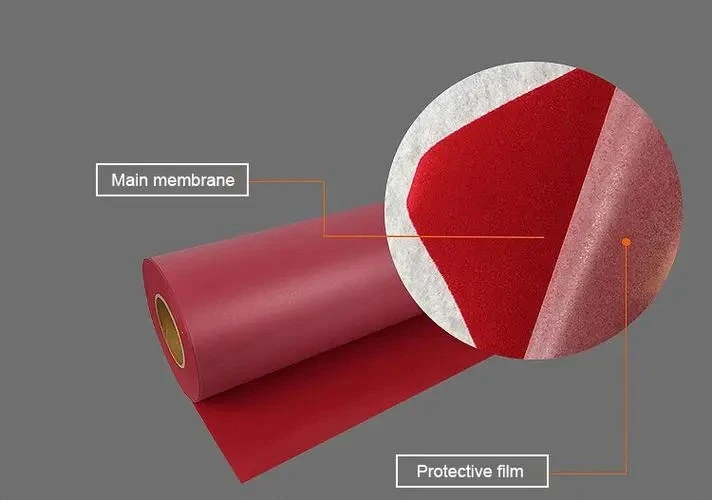

In medical applications, a high MVTR is often desirable as it helps to maintain a moist environment at the wound site, which promotes faster healing. For example, in a TPU Film Used In Medical, such as a transparent wound dressing, a proper MVTR can prevent the accumulation of excess moisture, which could lead to maceration and infection.
Adhesion and Bonding
Water absorption can also affect the adhesion and bonding properties of the Hydrophilic TPU Film. When the film absorbs water, its surface energy changes, which can either enhance or reduce its ability to adhere to other materials. In some cases, a small amount of water absorption can improve adhesion by allowing the film to wet the surface of the substrate more effectively.
However, excessive water absorption can cause the film to swell, which may lead to delamination or loss of adhesion. For example, in a composite structure where the Hydrophilic TPU Film is bonded to another layer, a high water absorption rate could compromise the integrity of the bond over time, especially in a humid environment.
Biocompatibility
In medical applications, biocompatibility is of utmost importance. The water absorption rate can impact the biocompatibility of the Hydrophilic TPU Film in several ways. On one hand, the ability to absorb and retain water can create a more hospitable environment for cells and tissues, promoting better integration with the body.
On the other hand, if the water absorption rate is too high, it may lead to the leaching of additives or other components from the film into the surrounding tissue. This could potentially cause an adverse biological response, such as inflammation or an allergic reaction. Therefore, it's essential to carefully control the water absorption rate to ensure optimal biocompatibility.
Controlling the Water Absorption Rate
As a supplier, we have developed various techniques to control the water absorption rate of our Hydrophilic TPU Film. These include adjusting the chemical composition of the TPU, modifying the manufacturing process, and applying surface treatments.
By carefully selecting the monomers and additives used in the TPU formulation, we can tailor the hydrophilicity of the film and thus control its water absorption rate. For example, incorporating more hydrophilic monomers can increase the water absorption capacity, while adding hydrophobic additives can reduce it.
The manufacturing process also plays a crucial role. Factors such as the extrusion temperature, cooling rate, and annealing can affect the crystallinity and morphology of the TPU, which in turn influence the water absorption rate. By optimizing these process parameters, we can achieve a more consistent and predictable water absorption rate.
Surface treatments can also be used to modify the water absorption behavior of the film. For instance, applying a hydrophobic coating to the surface of the film can reduce its water absorption rate, while a hydrophilic treatment can enhance it.
Application-Specific Considerations
Different applications require different water absorption rates to achieve optimal performance. For example, in Thermoplastic (TPU) Film Based Medical Devices such as catheter coatings, a relatively low water absorption rate may be preferred. This is because a high water absorption rate could lead to swelling of the coating, which may affect the functionality of the catheter and increase the risk of thrombosis.
In contrast, in a transdermal patch application, a higher water absorption rate may be beneficial. The absorbed water can help to enhance the solubility and diffusion of the drug through the skin, improving the delivery efficiency.
To help our customers select the most suitable Hydrophilic TPU Film for their specific applications, we offer a TPU Films Selector Tool. This tool takes into account various factors, including the desired water absorption rate, mechanical properties, and MVTR, to recommend the most appropriate film.
Conclusion
In conclusion, the water absorption rate is a key factor that significantly affects the performance of Hydrophilic TPU Film. It influences the mechanical properties, MVTR, adhesion, and biocompatibility of the film, making it essential to carefully control this parameter for different applications.
As a supplier of Hydrophilic TPU Film, we are committed to providing high-quality products with precisely tailored water absorption rates. Our expertise in formulation, manufacturing, and application development allows us to meet the diverse needs of our customers in various industries, especially in the medical field.
If you are interested in learning more about our Hydrophilic TPU Film or discussing your specific requirements, we encourage you to reach out to us. Our team of experts is ready to assist you in finding the best solution for your application.
References
- ASTM D570 - Standard Test Method for Water Absorption of Plastics
- Ratner, B. D., Hoffman, A. S., Schoen, F. J., & Lemons, J. E. (Eds.). (2004). Biomaterials science: an introduction to materials in medicine. Elsevier.
- Wypych, G. (Ed.). (2004). Handbook of plastics, elastomers, and composites. William Andrew Publishing.