

Hey there! I'm a supplier of Pa Hot Adhesive Film, and today I wanna talk about how this stuff performs in a vacuum. It's a topic that doesn't get enough attention, but it's super important, especially for industries where vacuum conditions are the norm.
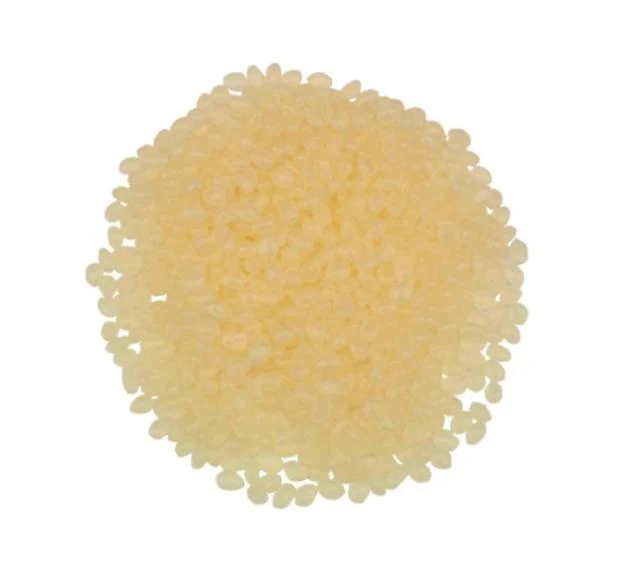
First off, let's quickly go over what Pa Hot Adhesive Film is. Pa stands for polyamide, and this Pa Hot Adhesive Film is a type of hot melt adhesive. Hot melt adhesives are pretty cool because they go from solid to liquid when heated and then back to solid when they cool, bonding materials together in the process. Polyamide hot melt adhesives, like the ones in our Pa Hot Adhesive Film, are known for their strong bonding properties, flexibility, and good resistance to chemicals and heat. You can learn more about Polyamide Hot Melt Adhesives on our website.

Now, let's dive into the vacuum situation. A vacuum is a space where there's very low pressure, almost no air or other gases. It's used in a bunch of industries, like electronics manufacturing, aerospace, and food packaging. In these industries, the performance of adhesives can be a make-or-break factor.
One of the key things to consider when using Pa Hot Adhesive Film in a vacuum is outgassing. Outgassing is when a material releases gas or vapor when it's in a low-pressure environment. This can be a big problem because the released gases can contaminate the vacuum chamber or cause issues with sensitive equipment. The good news is that Pa Hot Adhesive Film generally has low outgassing properties. Polyamide materials are pretty stable under vacuum conditions, which means they don't release a lot of unwanted gases. This makes them a great choice for applications where a clean vacuum environment is crucial.
Another important aspect is bonding strength. In a vacuum, the lack of air pressure can affect how well an adhesive bonds to surfaces. Some adhesives might lose their grip or form weak bonds due to the absence of the normal atmospheric pressure that helps them spread and adhere. But Pa Hot Adhesive Film holds up pretty well. Its chemical composition allows it to form strong bonds even in a vacuum. The polyamide polymers in the film have a high affinity for many different materials, like metals, plastics, and fabrics. This means that once it's heated and applied, it can create a reliable bond that can withstand the rigors of a vacuum environment.
Let's take the example of the Henkel Technomelt Pa 7802 Polyamide Hot Melt. This is a specific type of polyamide hot melt that's often used in our Pa Hot Adhesive Film. It's designed to have excellent bonding performance in various conditions, including vacuum environments. The adhesive has a fast setting time, which is great because it means you can quickly get your parts bonded and move on to the next step in the manufacturing process. And even in a vacuum, it maintains its bonding strength over time, which is really important for long-term reliability.
Flexibility is also a big plus when it comes to using Pa Hot Adhesive Film in a vacuum. In many vacuum applications, the bonded parts might be subject to some movement or vibration. If the adhesive is too rigid, it can crack or break, leading to a loss of the bond. But Pa Hot Adhesive Film is flexible enough to absorb these stresses without losing its grip. The polyamide polymers in the film can stretch and bend a bit, which helps it stay attached to the surfaces even when there's some movement.
Now, let's talk about temperature resistance. In a vacuum, temperature control can be tricky because there's no air to transfer heat. Some adhesives might break down or become less effective at high or low temperatures. But Pa Hot Adhesive Film has good temperature resistance. It can handle a wide range of temperatures, from relatively cold to quite hot. This means that whether your vacuum application involves cryogenic temperatures or high-temperature processes, our Pa Hot Adhesive Film can still do its job.
In the aerospace industry, for example, there are a lot of components that need to be bonded together in a vacuum environment. These components might be exposed to extreme temperatures during flight, from the cold of high altitudes to the heat generated by friction. Pa Hot Adhesive Film can be used to bond parts like electrical connectors, insulation materials, and structural components. Its low outgassing, strong bonding, flexibility, and temperature resistance make it a reliable choice for these critical applications.
In the electronics manufacturing industry, vacuum processes are often used for things like semiconductor packaging. The Pa Hot Adhesive Film can be used to bond different layers of the semiconductor package together. Its low outgassing properties are crucial here because any released gases could contaminate the delicate semiconductor chips. And its strong bonding and flexibility ensure that the package stays intact during handling and operation.
So, as you can see, Pa Hot Adhesive Film performs really well in a vacuum. It has a lot of great properties that make it suitable for a wide range of industries and applications. Whether you're in aerospace, electronics, or any other field that uses vacuum processes, our Pa Hot Adhesive Film could be the solution you're looking for.
If you're interested in learning more about our Pa Hot Adhesive Film or have a specific application in mind, don't hesitate to reach out. We're here to help you find the right adhesive solution for your needs. Whether you need samples to test or have questions about the technical details, just let us know. We can work with you to ensure that our Pa Hot Adhesive Film meets your requirements and performs perfectly in your vacuum environment. So, get in touch and let's start a conversation about how we can help you with your bonding needs.
References
- "Polyamide Hot Melt Adhesives: Properties and Applications" - Industry Research Report
- "Adhesive Performance in Vacuum Environments" - Journal of Adhesive Science and Technology