

Hey there! As a PU film supplier, I often get asked a bunch of questions about our products. One question that pops up quite a bit is, "Can PU film be ironed?" Well, let's dive right into this topic and find out.
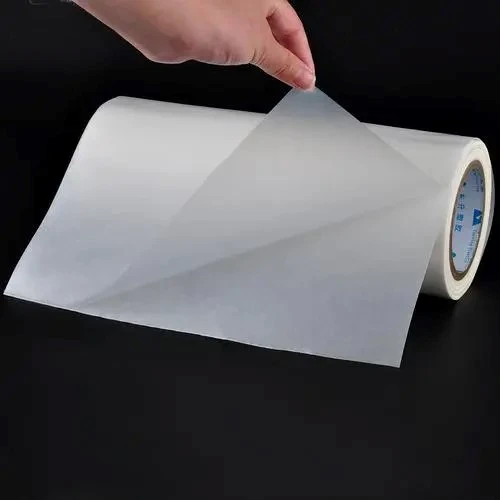
First off, let's understand what PU film is. PU stands for polyurethane, and it's a type of polymer that's used in a wide range of applications. We've got Polyurethane Film Medical for the medical field, Pu Film for Industrial for all sorts of industrial uses, and Polyurethane Film for Outdoor Cover to protect stuff from the elements.
Now, back to the ironing question. The answer isn't a simple yes or no. It depends on a few factors.
Factors Affecting Whether PU Film Can Be Ironed
1. Type of PU Film
There are different types of PU films out there, each with its own set of properties. Some are more heat - resistant than others. For example, the industrial - grade PU films are often designed to withstand harsher conditions, including higher temperatures. On the other hand, medical - grade PU films are usually more delicate and might not be able to handle the heat of an iron as well.
2. Thickness of the Film
Thicker PU films generally have better heat - resistance compared to thinner ones. A thick film can act as a better insulator and is less likely to melt or deform when exposed to the heat of an iron. However, if the film is too thick, it might not be practical to iron it anyway, as it could be difficult to get a smooth finish.
3. Ironing Temperature
This is a crucial factor. PU films start to soften and deform at different temperatures. If you set your iron too high, you're almost guaranteed to damage the film. You need to know the melting point or softening point of the specific PU film you're dealing with. Most PU films have a softening point in the range of 100 - 200 degrees Celsius, but this can vary widely.
How to Iron PU Film Safely (If Possible)
If you've determined that your PU film can be ironed, here are some steps to follow:
1. Test a Small Area
Before you go all in and start ironing a large piece of film, cut off a small scrap and test it. Set your iron to a low temperature and press it gently on the scrap for a few seconds. Check to see if the film has melted, deformed, or changed color. If it looks okay, you can proceed with caution.
2. Use a Pressing Cloth
Place a thin, clean cloth between the iron and the PU film. This acts as a buffer and helps distribute the heat more evenly. It also reduces the direct contact between the hot iron and the film, minimizing the risk of damage.
3. Low Heat and Short Pressing Time
Keep the iron on a low - heat setting and press it lightly on the film for a short period. Don't leave the iron in one place for too long, as this can cause uneven heating and damage the film. Move the iron around slowly and smoothly.

Risks of Ironing PU Film
Even if you follow all the safety steps, there are still risks involved in ironing PU film.
1. Melting and Deformation
If the temperature is too high, the film will melt. This can ruin the film and make it unusable. Even if it doesn't completely melt, it might deform, losing its smooth surface and shape.
2. Chemical Changes
Exposing PU film to high heat can cause chemical changes in the material. This can affect its performance and durability. For example, it might become less flexible or lose its water - resistance.
3. Adhesion Issues
If the PU film is attached to another material, ironing it can cause problems with the adhesion. The heat might weaken the bond between the film and the substrate, leading to peeling or delamination.
When Not to Iron PU Film
There are some situations where you should definitely avoid ironing PU film.
1. Delicate Films
As mentioned earlier, medical - grade and some thin, delicate PU films are not suitable for ironing. These films are often designed for specific applications where their properties need to be maintained precisely, and ironing can easily damage them.
2. Films with Special Coatings
Some PU films have special coatings for things like anti - microbial properties or UV protection. Ironing can damage these coatings, rendering the film less effective.
3. Films with Printed Designs
If the PU film has printed designs on it, ironing can cause the ink to smudge or fade. The heat can also affect the adhesion of the ink to the film.
In conclusion, while it's possible to iron some types of PU film under the right conditions, it's not something to be done lightly. You need to understand the properties of the film and take all the necessary precautions. If you're unsure, it's always best to consult with a professional or contact us, your trusted PU film supplier.
If you're in the market for high - quality PU films for your medical, industrial, or outdoor cover needs, we've got you covered. We offer a wide range of PU films with different properties and specifications. Whether you need a heat - resistant film or a delicate medical - grade one, we can provide the right product for you. Get in touch with us to start a procurement discussion, and let's find the perfect PU film solution for your business.
References
- "Polyurethane Handbook" by G. Oertel
- Industry research reports on polyurethane film properties and applications