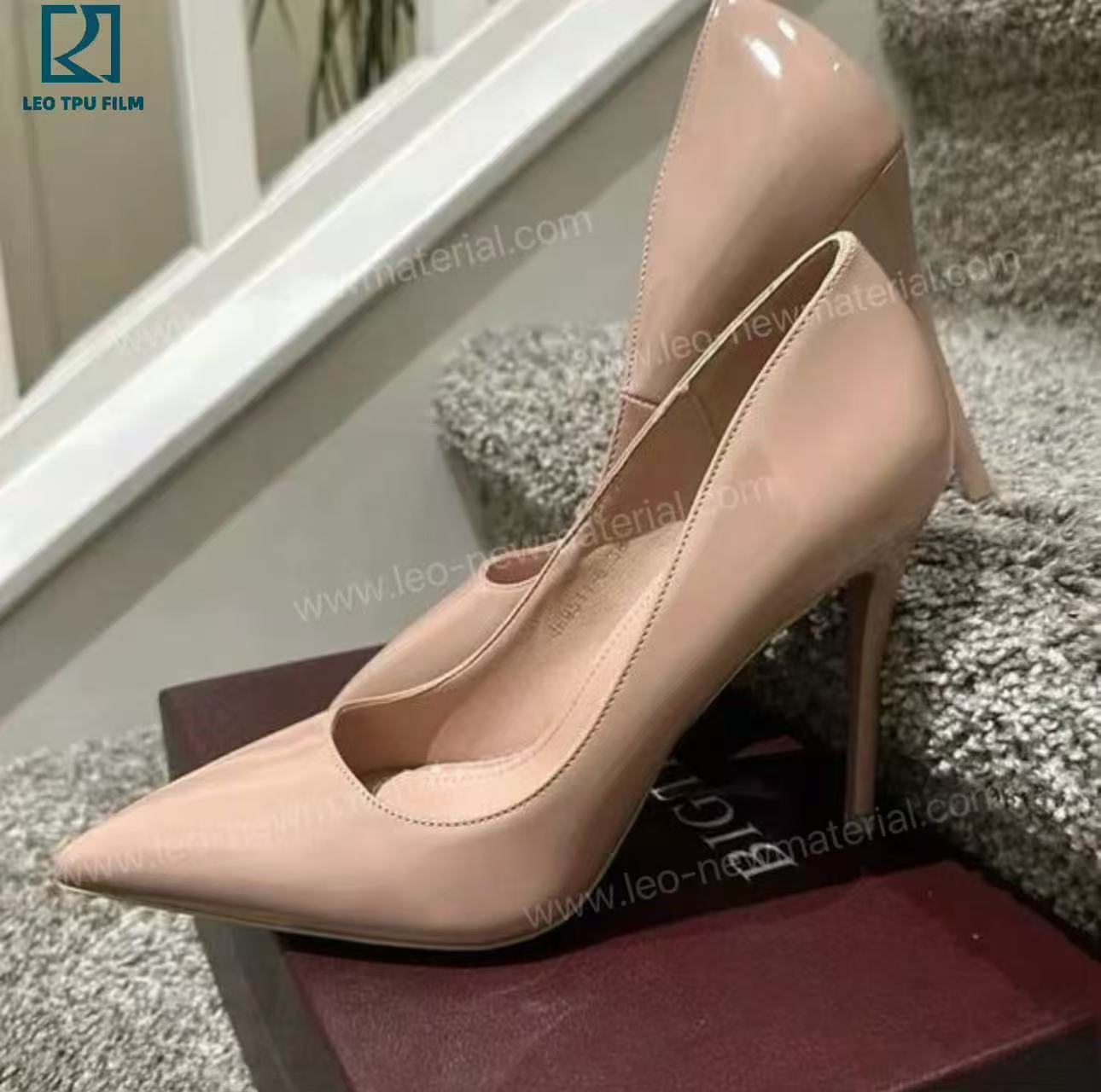
In the field of footwear material development, the wear resistance and durability of a material are the primary key indicators for assessing its quality. Unlike flat shoes, high heels concentrate the load within an extremely small contact area, resulting in extremely high unit pressure; consequently, they place exceptionally high demands on the material's resistance to wear, compression, and impact. The fundamental reason why ordinary materials cannot support high-end footwear is that they are unable to withstand the high-stress conditions associated with slender high heels over extended periods.
Conventional PVC has poor wear resistance; after short periods of everyday wear, the material becomes noticeably thinner and unevenly worn, exposing the internal metal fasteners of the heel. Once this occurs, not only does the walking feel deteriorate, but problems such as scraping the floor, thread jamming, and loss of walking balance also arise, significantly increasing the risk of ankle sprains and slipping. In contrast, high-hardness TPU offers an overall wear resistance lifespan 3–5 times that of PVC, which can substantially extend the component replacement interval and markedly improve product durability and user experience.
The fundamental difference in performance stems from differences in the internal structure of the materials. TPU belongs to an elastic polyurethane system composed of both soft and hard segments: the high-hardness hard segments provide stable support and shape retention under compression, while the flexible soft segments absorb friction, impact, and pressure. During operation, unlike ordinary plastics, TPU does not undergo direct, hard wear that produces powder; instead, it dissipates forces through microscopic elastic buffering, gradually and uniformly consuming wear and achieving an exceptionally long service life.
In everyday use, heel impacts against wall corners or the edges of steps are high-frequency scenarios. When traditional brittle materials are struck, they immediately suffer damage, chipping or deformation, resulting in asymmetric stress distribution; consequently, the rate of subsequent wear accelerates exponentially, creating an irreversible wear cycle. In contrast, high-hardness 60D–75D TPU combines hardness with flexibility, offering both rigidity and resilience. Upon impact, its tough layer buffers and absorbs energy, while the surface layer is less prone to cracking or flaking. Even after prolonged use, it maintains a flat and well-defined contact surface, ensuring stable walking.
Currently, high-end footwear manufacturers universally employ a replaceable TPU upper structure. Leveraging the material's exceptional stability and integrating a modular design, this approach not only ensures a premium foot feel over the long term but also reduces after-sales maintenance costs, making it the most cost-effective high-end footwear material solution available today.
If you are developing high-end women's footwear and are unsure about selecting the appropriate leather material, feel free to contact us; we can customize a TPU solution tailored to your needs.
📩 Email: lee@leo-newmaterial.com
🌐 Website: www.leo-newmaterial.com
WeChat: +86-13105269750
Whatsapp: +86-13105269750