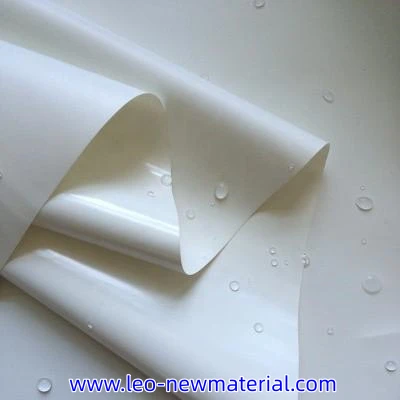
The TPU film of medical protective equipment is a medical-grade thermoplastic polyurethane extruded film, which is mostly used in orthopedic rehabilitation protective equipment, inflatable fixed braces, pressure protective equipment, waist/knee liner airbags and pressurized physiotherapy airbags. It belongs to a kind of skin contact material of medical equipment, and must meet the bio-compatibility, and cannot be replaced by ordinary industrial TPU.
Material classification (two kinds of protective gear are commonly used)
1. Polyester TPU (most commonly used)
High mechanical strength, tear resistance and good air tightness; Suitable for inflatable airbags, orthopedic inflatable boots and waist protection airbags; Disadvantages Long-term soaking and hydrolysis stability is average.
2. Poly ether TPU
Hydrolysis resistance, low temperature softness, and microbial resistance; Suitable for long-term close-fitting and sweaty environment, suitable for long-term wearing protective gear, but the strength is slightly lower than that of polyester type.
> hardness selection: protective film mainstream 70A~85A. Too soft is easy to stretch and deform, too hard is poor in fit and bent abnormally.
Core performance (key point of protective gear scene)
1. High elasticity+mechanics
The elongation at break is more than 500%, and the tensile strength is high; Repeated bending, inflation and deflation for hundreds of thousands of times is not easy to crack; Puncture resistance, friction resistance, protective gear hook and loop repeated friction is not easy to break.
2. Waterproof+customization moisture permeability
-Airtight type: pinhole-free, good pressure keeping → inflatable airbag, pressure support.
-Micro-porous moisture permeable model: waterproof but permeable to sweat and water vapor, used as the surface composite film of protective gear to reduce stuffy sweat.
3. It can be sterilized
It is compatible with EO ethylene oxide, gamma ray and electron beam sterilization, and does not em brittle and yellow after sterilization, which meets the requirements of medical device factory sterilization.
4. Friendly processing
Thermoplastic, high-frequency heat sealing, heat sealing and composite non-woven fabric; No vulcanization, high production efficiency, suitable for airbag edge sealing and compounding with ribbon/fabric.
Typical application in medical protective equipment
1. Orthopedic inflatable fixing braces (inflatable boots, ankle joint fixing airbags)---0.12~0.20mm polyester TPU is the main one, focusing on air tightness.
2. Medical waist pads and knee pads have built-in pressurized airbags.
3. Intermittent pressure therapy (antithrombotic pressure pump balloon)
4. The rehabilitation splint is lined with flexible cushion and protective lining film.
5. Protective fabric composite layer (TPU film+knitted fabric, waterproof and moisture permeable elastic fabric)
Thickness reference:
Thin composite fabric: 0.03~0.08mm
Conventional inflatable airbag: 0.12~0.18mm (industry preferred 0.15mm)
Repeated inflation and deflation under heavy load: 0.20 ~ 0.30 mm.
Comparison: TPU vs PVC vs Latex vs Silicone
TPU: Good elasticity, no latex allergy risk, easy for high-frequency heat sealing and great mechanical strength. Polyester TPU tends to hydrolyze under prolonged hot and humid environment.
PVC: Low cost. Contains elasticizes, rigid texture, brittle at low temperatures, restricted for medical use.
Natural Latex: Excellent elasticity. High allergy risk, unable to be heat sealed and requires vulcanization.
Silicone Film: Outstanding hydrolysis resistance and bio-compatibility, but high cost and difficult for high-frequency heat sealing
.