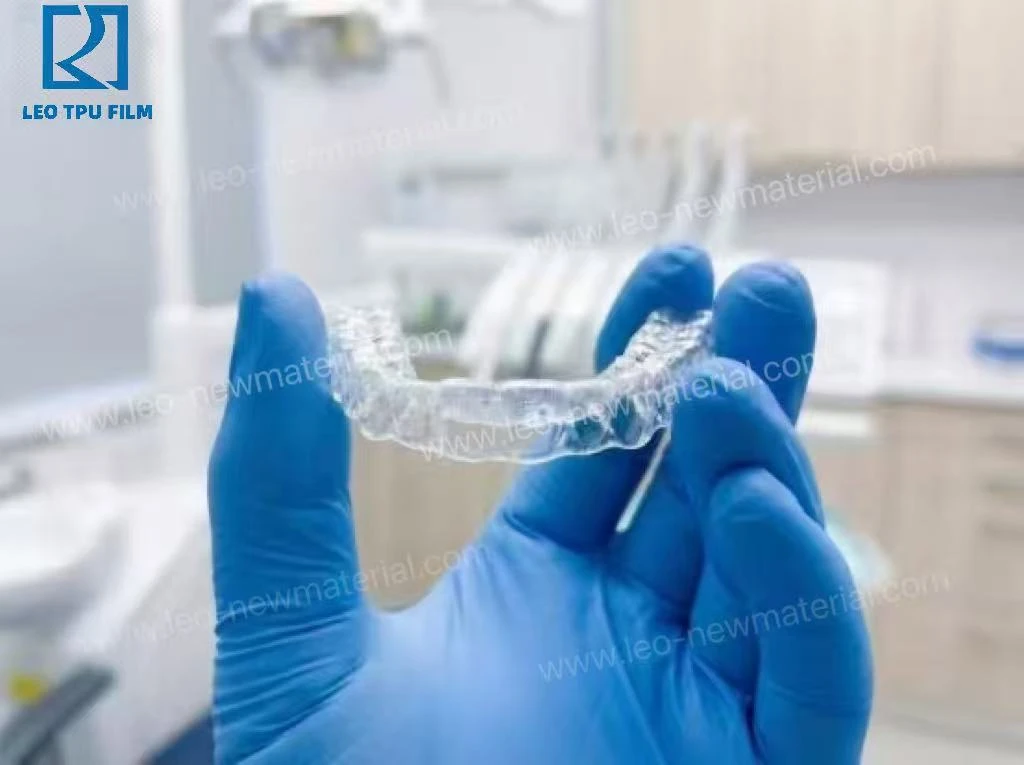
Orthodontic materials represent a field that places extremely high demands on the comprehensive performance of polymer materials. A qualified orthodontic substrate must simultaneously meet multiple requirements, including biosafety, mechanical performance, resistance to environmental aging, and fatigue resistance to bending; few materials can satisfy all of these criteria simultaneously.
The oral cavity is a unique operating environment: the material is continuously immersed in saliva, with its pH level constantly changing according to dietary intake, its temperature remaining stable, and its structure undergoing repeated bending every day. Consequently, the primary requirement for orthodontic appliance substrates is biocompatibility. Medical-grade TPU has undergone a comprehensive suite of medical device testing and is free of leachable substances and allergenic properties; it also exhibits excellent hydrolysis resistance in the moist environment of saliva, making it less prone to powdering, yellowing, or loss of elasticity during long-term wear.
The second threshold is mechanical equilibrium, which is also the most challenging aspect. The material must not be too soft; otherwise, it will fail to achieve sufficient shaping and will be unable to provide stable corrective force on the teeth. Nor should it be too hard; otherwise, the impact generated during force application will be pronounced, potentially damaging the tooth roots and abrading the oral mucosa. The molecular structure of TPU, which combines both soft and hard segments, achieves precisely this balance: the hard segments provide structural support for shaping, while the soft segments offer elastic cushioning, delivering a continuous and gentle corrective force.
Compared with nonelastic, rigid materials such as PETG, TPU offers significant advantages in terms of elongation at break and tear resistance. Since orthodontic aligners are removed and put back on multiple times each day, the areas where they are bent are highly susceptible to wear; after repeated deformation, TPU is less likely to suffer irreversible damage and is less prone to developing white marks or cracking, thereby extending the service life of each set of aligners.
Many R&D efforts fall into a common pitfall: they pursue ultra-high transparency at the expense of other properties. For orthodontic appliances, however, mechanical stability, aging resistance, and wearing comfort take precedence; transparency is an additional attribute that can be achieved through formulation adjustments, whereas stable and sustained elasticity constitutes the core value of an elastic substrate.
The orthodontic industry is currently evolving toward more refined treatment approaches; consequently, there is a growing demand for complex tooth-extraction cases, anchorage control, and fine tooth adjustments. This has led to continuously rising requirements for the mechanical stability and fatigue resistance of the base material. Leveraging its unique elastic properties, medical-grade TPU is becoming the preferred base material for high-end clear aligner solutions. There is no single "standard answer" for material formulation; instead, we can adjust the hardness, elasticity, transparency, and hydrolytic resistance of TPU according to the specific treatment plan to meet different clinical needs.
When choosing clear aligners, the details of the material subtly influence your orthodontic experience. If you would like to learn more about aligner film materials, or if your clinic or peers require compliant medical-grade TPU raw materials, please feel free to contact us at any time for further discussion.
📩 Email: lee@leo-newmaterial.com
🌐 Website: www.leo-newmaterial.com
WeChat: +86-13105269750
Whatsapp: +86-13105269750