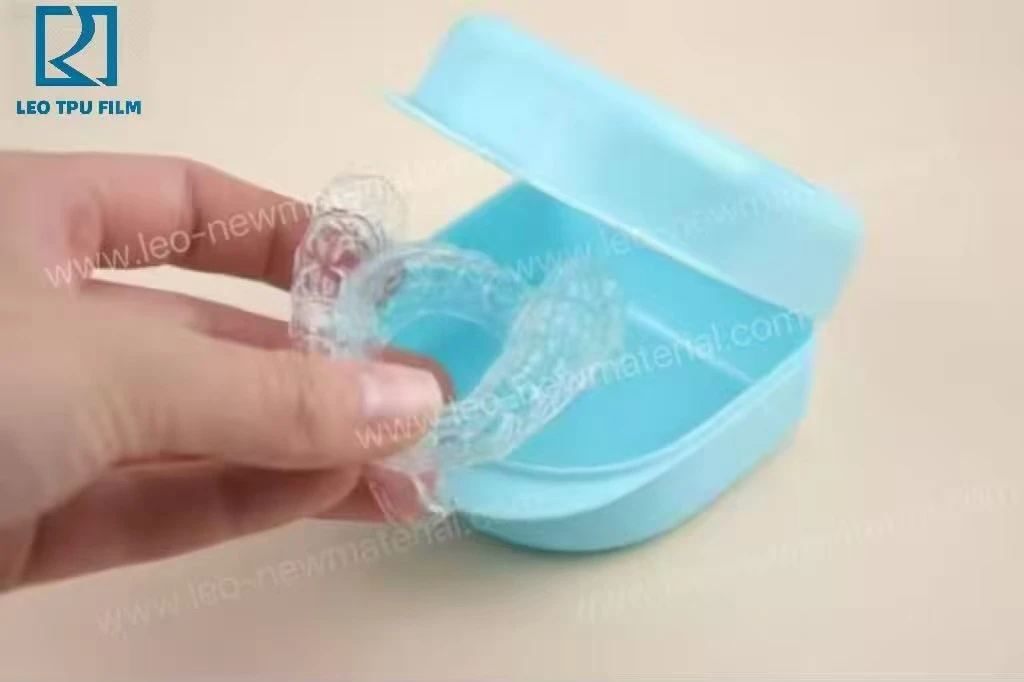
Many people considering clear aligner orthodontic treatment wonder: although all aligners are transparent, some wear them with almost no discomfort and minimal irritation, while others experience unbearable soreness and tenderness, and their oral tissues are frequently irritated by the edges of the aligners. The root cause of this difference lies in the material used for the aligners.
Many people assume that clear aligners are merely pieces of transparent plastic; as long as they appear see-through, they are essentially the same. However, the two most common base materials on the market-hard PETG sheets and medical-grade elastic TPU-provide completely different wearing experiences.
PETG hard plastic offers a crisp fit and excellent transparency, as well as more affordable pricing; however, its material is relatively rigid, resulting in a "hard-top" force distribution. When worn, teeth are subjected to concentrated external forces over a short period, making the soreness and pressure particularly pronounced during the first few days after switching to a new orthodontic appliance. Hard materials have very little tolerance for edge misalignment; if the appliance does not fit perfectly against the tooth surface, the edges will continuously rub against the inner walls of the mouth, making ulceration likely. Removing the appliance during meals and reinserting it repeatedly subjects it to bending and flexing; after a period of use, the appliance tends to turn white and become brittle, and may even break.
Medical-grade TPU elastic substrates follow a soft-force correction approach: rather than forcibly displacing the teeth, they rely on the material's rebound to continuously release a steady, gentle force that guides the teeth into slow movement. This aligns with the principle of light-force orthodontic treatment advocated in clinical practice; consequently, the soreness and tension experienced during the initial bracket placement are much milder, and the adaptation period is shorter.
TPU has a soft and flexible texture, and its edges provide built-in cushioning; even if there are minor fit deviations, it is less likely to scratch the oral mucosa. It is also resistant to saliva and to the acidic and alkaline environments of the oral cavity, so it does not tend to yellow or age over time, and its corrective force decays slowly. Of course, it is not a universal solution: for simple minor tooth adjustments or as a short-term retainer after orthodontic treatment, PETG is more than adequate; however, when the dental arch is complex, the orthodontic treatment period is long, or the oral mucosa is inherently sensitive, and the user wishes for greater comfort throughout the entire treatment period, a device made from TPU substrate should be the preferred choice.
Orthodontic treatment is not necessarily better the faster it is completed; gentle, sustained force is more likely to ensure stable results and reduce the risk of relapse. When choosing braces, do not focus solely on whether they look good; wearing comfort and material safety are equally important.
The competitiveness of high-quality materials lies in the imperceptible wearing experience. If you are seeking a medical-grade TPU film solution suitable for clear aligner treatment, feel free to contact us at any time to discuss sample production.
📩 Email: lee@leo-newmaterial.com
🌐 Website: www.leo-newmaterial.com
WeChat: +86-13105269750
Whatsapp: +86-13105269750