

Hey there! As a supplier of TPU hot melt adhesive, I often get asked about how our product performs in high-temperature environments. Well, let's dive right into it and explore the ins and outs of TPU hot melt adhesive under the heat.
First off, what is TPU hot melt adhesive? TPU stands for thermoplastic polyurethane, and it's a type of adhesive that's known for its flexibility, durability, and strong bonding properties. It comes in various forms, like the TPU Hot Melt Adhesive Film for Textile and TPU Hot Melt Adhesive Film, which are widely used in industries such as textiles, footwear, automotive, and electronics.
Now, let's talk about high-temperature environments. High temperatures can really put a strain on adhesives. They can cause the adhesive to soften, lose its bonding strength, or even break down completely. But how does TPU hot melt adhesive hold up?
One of the great things about TPU hot melt adhesive is its relatively high melting point. Most TPU hot melt adhesives have a melting point in the range of 100 - 200°C (212 - 392°F), depending on the specific formulation. This means that it can withstand a fair amount of heat before it starts to lose its integrity.
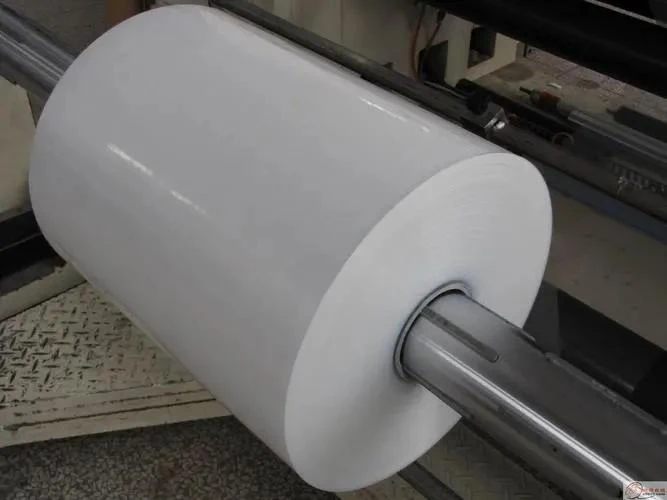

In normal high-temperature applications, say up to around 80 - 100°C (176 - 212°F), TPU hot melt adhesive maintains its bonding strength pretty well. It doesn't easily soften or flow, which is crucial for keeping the bonded materials together. For example, in the automotive industry, where parts are exposed to engine heat and sunlight, TPU hot melt adhesive can be used to bond interior components like seat covers and dashboard trims. The adhesive can handle the heat without coming apart, ensuring a long-lasting and reliable bond.
However, when the temperature gets even higher, above 100°C (212°F), things start to get a bit more challenging. At these temperatures, the TPU hot melt adhesive will gradually start to soften. The softening is a natural property of thermoplastics, and it's something that we've designed the adhesive to handle in a controlled way.
The softening of the adhesive doesn't necessarily mean that the bond is completely lost. Instead, it becomes more flexible. This can be an advantage in some cases. For instance, in the electronics industry, when bonding components that may expand or contract due to temperature changes, the slightly softened TPU hot melt adhesive can accommodate these movements without cracking or breaking the bond.
But if the temperature keeps rising to extreme levels, say above 150°C (302°F) for an extended period, the TPU hot melt adhesive will start to degrade. The polymer chains in the TPU will begin to break down, and the adhesive will lose its bonding strength. At this point, the bond will fail, and the materials will separate.
To improve the performance of TPU hot melt adhesive in high-temperature environments, we've developed several strategies. One approach is to add heat-resistant additives to the adhesive formulation. These additives can increase the melting point of the adhesive and enhance its thermal stability. Another method is to optimize the molecular structure of the TPU. By controlling the length and arrangement of the polymer chains, we can make the adhesive more resistant to heat.
We've also conducted a lot of tests to understand how our TPU hot melt adhesive performs under different high-temperature conditions. We use specialized equipment to simulate high-temperature environments and measure the bonding strength of the adhesive over time. These tests help us to fine-tune our products and ensure that they meet the needs of our customers.
In addition to the technical aspects, it's also important to consider the application process when using TPU hot melt adhesive in high-temperature environments. The bonding process should be carried out at the right temperature and pressure to ensure a strong and reliable bond. If the temperature is too high during the bonding process, it can cause the adhesive to degrade prematurely. On the other hand, if the temperature is too low, the adhesive may not flow properly, resulting in a weak bond.
So, in conclusion, TPU hot melt adhesive has a decent performance in high-temperature environments. It can withstand moderate heat without losing its bonding strength and can even provide some flexibility at higher temperatures. However, extreme heat will eventually cause it to degrade.
If you're in an industry that requires adhesives for high-temperature applications, TPU hot melt adhesive could be a great choice. Whether you need TPU Hot Melt Adhesive Film for Textile for your textile products or TPU Hot Melt Adhesive Film for your electronic devices, we've got you covered.
If you're interested in learning more about our TPU hot melt adhesive products or want to discuss your specific requirements, feel free to reach out. We're always happy to help and look forward to the opportunity to work with you on your projects.
References
- "Handbook of Adhesive Technology", Second Edition, Edited by A. Pizzi and K. L. Mittal
- "Thermoplastic Polyurethanes: A Comprehensive Guide", Edited by N. R. Lamba, K. S. Schollenberger, and R. P. Kambour