

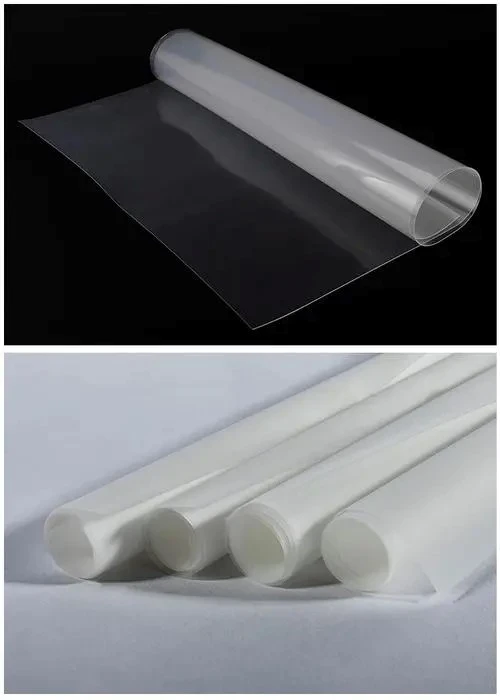
Elasticity is a critical property when it comes to TPU (Thermoplastic Polyurethane) film for air beds. As a supplier of TPU Film for Air Bed, I've witnessed firsthand how the elasticity of this material impacts the performance and user experience of air beds. In this blog, I'll delve into the various aspects of how TPU film for air beds performs in terms of elasticity.
Understanding Elasticity in TPU Film for Air Beds
Elasticity refers to the ability of a material to deform under stress and return to its original shape when the stress is removed. In the context of TPU film for air beds, this means that the film can stretch as the air bed is inflated and then revert to its initial state when deflated. This property is essential for several reasons.
Firstly, it allows the air bed to be easily inflated and deflated. When air is pumped into the bed, the TPU film stretches to accommodate the increased volume of air. A high - quality TPU film with good elasticity can stretch uniformly without developing weak spots or tearing. Conversely, when the air is released, the film contracts back to its original form, making the air bed compact and easy to store.
Secondly, elasticity contributes to the comfort of the air bed. A more elastic TPU film can conform better to the shape of the user's body. As a person lies on the air bed, the film stretches slightly to distribute the body weight evenly, reducing pressure points and providing a more comfortable sleeping surface.
Factors Affecting the Elasticity of TPU Film for Air Beds
Chemical Composition
The chemical structure of TPU plays a significant role in its elasticity. TPU is a copolymer composed of hard and soft segments. The soft segments are responsible for the flexibility and elasticity of the material. Different formulations of TPU can have varying ratios of hard to soft segments, which directly affect the film's elastic properties. For example, a TPU film with a higher proportion of soft segments will generally have greater elasticity.

Manufacturing Process
The way the TPU film is manufactured also impacts its elasticity. Extrusion, calendering, and casting are common manufacturing methods for TPU film. Each method can result in different molecular orientations and structures within the film, which in turn affect its elastic behavior. For instance, proper extrusion parameters, such as temperature and pressure, can ensure a more uniform molecular distribution, leading to better elasticity.
Thickness of the Film
The thickness of the TPU film is another important factor. Generally, thinner TPU films tend to be more elastic than thicker ones. A thinner film can stretch more easily because there is less material to resist deformation. However, it's a delicate balance, as a film that is too thin may not be strong enough to withstand the pressure inside the air bed.
Testing the Elasticity of TPU Film for Air Beds
To ensure the quality of our TPU Film for Air Bed, we conduct a series of tests. One of the most common tests is the tensile test. In this test, a sample of the TPU film is clamped at both ends and pulled at a constant rate until it breaks. The test measures the maximum stress the film can withstand and the amount of elongation it can achieve before failure.
We also perform cyclic testing, where the film is repeatedly stretched and released. This simulates the real - world use of an air bed, which is inflated and deflated multiple times. By observing the film's behavior over a large number of cycles, we can determine its long - term elastic performance and durability.
Performance of TPU Film for Air Beds in Real - World Applications
In real - world scenarios, the elasticity of TPU film for air beds has a profound impact on the product's performance. For example, in the medical field, Medical Grade TPU Film is often used for air beds in hospitals. The high elasticity of the TPU film allows these air beds to provide excellent pressure relief for patients who are bedridden for extended periods. The film can stretch and conform to the patient's body, reducing the risk of pressure ulcers.
In the consumer market, TPU film for air mattresses (TPU Film for Air Mattress) is highly sought after. Consumers appreciate the comfort and convenience that an air mattress with elastic TPU film offers. The ability of the film to stretch and contract makes the air mattress easy to set up and pack away, and the improved comfort due to better body contouring enhances the overall user experience.
Comparing TPU Film with Other Materials for Air Beds
When compared to other materials commonly used for air beds, such as PVC (Polyvinyl Chloride), TPU film has several advantages in terms of elasticity. PVC is a rigid material by nature and often requires plasticizers to make it more flexible. However, over time, these plasticizers can migrate out of the PVC, causing the material to become brittle and lose its elasticity.
On the other hand, TPU film has inherent elasticity without the need for plasticizers. It maintains its elastic properties over a long period, even with repeated use. This makes TPU film a more reliable and long - lasting choice for air beds.
Maintaining the Elasticity of TPU Film for Air Beds
To ensure that the TPU film for air beds retains its elasticity over time, proper care is necessary. Avoid exposing the air bed to extreme temperatures, as high temperatures can cause the TPU to soften and lose its shape, while low temperatures can make it brittle. Also, be careful not to puncture or scratch the TPU film, as damage to the film can weaken its structure and reduce its elasticity.
Conclusion
The elasticity of TPU film for air beds is a crucial property that affects the functionality, comfort, and durability of the air bed. As a supplier, we are committed to providing high - quality TPU film with excellent elastic performance. Our TPU film is carefully formulated and manufactured to meet the diverse needs of different applications, whether it's for medical air beds or consumer air mattresses.
If you're in the market for TPU Film for Air Bed and are interested in learning more about our products or discussing a potential purchase, we'd love to hear from you. Feel free to reach out to us to start a conversation about your specific requirements.
References
- "Handbook of Thermoplastic Elastomers" by B. M. Walker and C. P. Rader
- "Polymer Science and Technology" by Donald R. Paul and Charles B. Bucknall
- Industry reports on TPU film for air beds from market research firms.