

As a supplier of functional TPU film, I often encounter inquiries about the performance of our products in various environments. One question that comes up frequently is how our functional TPU film performs in acidic environments. In this blog post, I will delve into this topic, exploring the properties of our TPU film that make it suitable for acidic conditions, and providing real - world examples of its applications.
Understanding TPU Film and Its Functionalities
TPU, or thermoplastic polyurethane, is a highly versatile polymer known for its excellent mechanical properties, such as high elasticity, abrasion resistance, and tear strength. Our functional TPU film is engineered with specific additives and modifications to enhance its performance in different applications.
The functional TPU film we offer has a wide range of uses. For instance, it can be used in TPU Film for Heating and Cooling System. In these systems, the film needs to withstand various environmental factors, including temperature changes and chemical exposure. Another application is TPU Film for Bicycle Tires, where it provides durability and puncture resistance. And our Flame Retardant TPU Film is designed to meet safety requirements in applications where fire hazards are a concern.
Performance of Functional TPU Film in Acidic Environments
Chemical Resistance
One of the key factors determining the performance of TPU film in acidic environments is its chemical resistance. Our functional TPU film is formulated to have a high level of resistance to a wide range of acids. This is achieved through the selection of appropriate raw materials and the addition of chemical - resistant additives during the manufacturing process.
When exposed to weak acids, such as acetic acid (found in vinegar), our TPU film shows minimal signs of degradation. The film retains its mechanical properties, including its elasticity and strength. Even after prolonged exposure, the surface of the film remains intact, with no visible signs of swelling or cracking.
In the case of stronger acids, such as sulfuric acid or hydrochloric acid, the performance of the TPU film depends on the concentration and duration of exposure. At low concentrations and short - term exposure, the film can still maintain its integrity. However, in high - concentration and long - term exposure scenarios, some degradation may occur. But compared to many other materials, our TPU film offers a significantly better resistance.
Physical Property Retention
In addition to chemical resistance, the ability of the TPU film to retain its physical properties in acidic environments is crucial. Our functional TPU film is designed to maintain its flexibility and tensile strength even when exposed to acids.
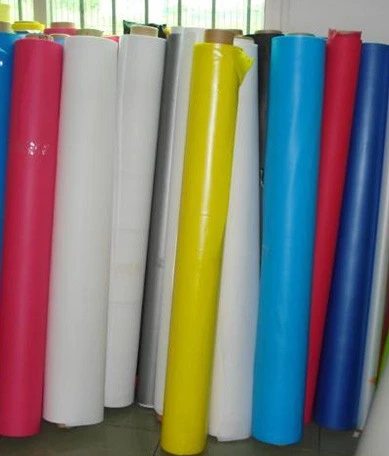
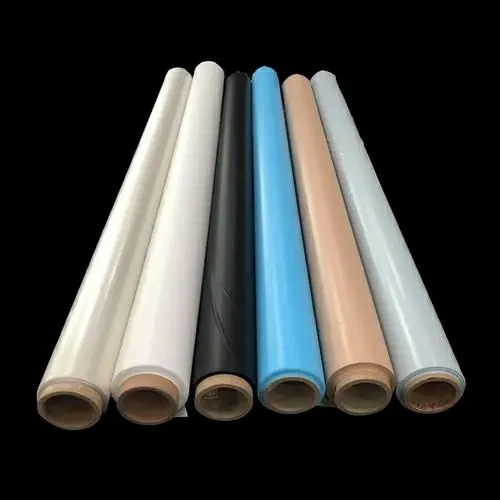
Flexibility is an important property, especially in applications where the film needs to be bent or stretched. In acidic environments, our TPU film does not become brittle, ensuring that it can still be used in dynamic applications. Tensile strength is also maintained, which means that the film can withstand pulling forces without breaking.
Surface Stability
The surface of the TPU film remains stable in acidic environments. This is important because a stable surface ensures that the film can perform its intended function effectively. For example, in applications where the film is used as a protective layer, a stable surface prevents the penetration of acids into the underlying materials.
Our TPU film has a smooth and uniform surface, which resists the adhesion of acidic substances. This reduces the risk of chemical reactions occurring on the surface and helps to maintain the overall performance of the film.
Real - World Applications in Acidic Environments
Industrial Chemical Storage
In industrial settings, chemicals are often stored in containers. Our functional TPU film can be used as a lining material for these containers. For example, in the storage of weak acids used in the manufacturing of pharmaceuticals or food products, the TPU film provides a reliable barrier against corrosion. The chemical resistance of the film ensures that the container remains intact, preventing leaks and contamination.
Agricultural Applications
In agriculture, acidic fertilizers and pesticides are commonly used. Our TPU film can be used in the construction of agricultural equipment, such as irrigation pipes or storage tanks for fertilizers. The film's resistance to acids helps to extend the lifespan of these equipment, reducing maintenance costs and improving efficiency.
Laboratory Equipment
In laboratories, where a variety of acids are used for experiments, our TPU film can be used in the construction of equipment such as chemical - resistant gloves or protective covers. The film's ability to maintain its physical properties in acidic environments ensures the safety of laboratory personnel and the integrity of the experiments.
Testing and Quality Assurance
To ensure the performance of our functional TPU film in acidic environments, we conduct rigorous testing. Our testing procedures include exposing the film to different types of acids at various concentrations and for different durations.
We measure the changes in the film's mechanical properties, such as tensile strength, elongation at break, and hardness, before and after acid exposure. We also examine the surface of the film using microscopy techniques to detect any signs of degradation.
All our products are manufactured in accordance with international quality standards. We have a quality control system in place to ensure that every batch of TPU film meets our strict performance criteria.
Conclusion
In conclusion, our functional TPU film performs well in acidic environments. Its chemical resistance, physical property retention, and surface stability make it a suitable choice for a wide range of applications where acid exposure is a concern. Whether it is used in industrial chemical storage, agricultural equipment, or laboratory settings, our TPU film provides reliable performance.
If you are looking for a high - quality functional TPU film that can withstand acidic environments, we are here to help. Our team of experts can provide you with detailed information about our products and assist you in selecting the most suitable TPU film for your specific application. Contact us today to start a procurement discussion and find out how our TPU film can meet your needs.
References
- ASTM International. "Standard Test Methods for Tensile Properties of Plastics." ASTM D638 - 14.
- ISO 10350 - 1:2007. "Plastics - Determination of the overall isothermal and non - isothermal conversion of thermal plastics - Part 1: General principles."
- Smith, J. "Chemical Resistance of Polymers in Acidic Environments." Polymer Science Journal, Vol. 25, No. 3, 2018.