From Replacing PVC to Opening Up a New Market: The Next Five Years for TPU Film
Market Landscape: Dividends in the General-Purpose Sector Narrowing
In 2026, the global TPU film market size is estimated to be approximately $4.6 billion to $4.9 billion, with a compound annual growth rate ranging from 6.5% to 7.5%; the China market accounts for about 40% of the global market, making it the largest producer and consumer.
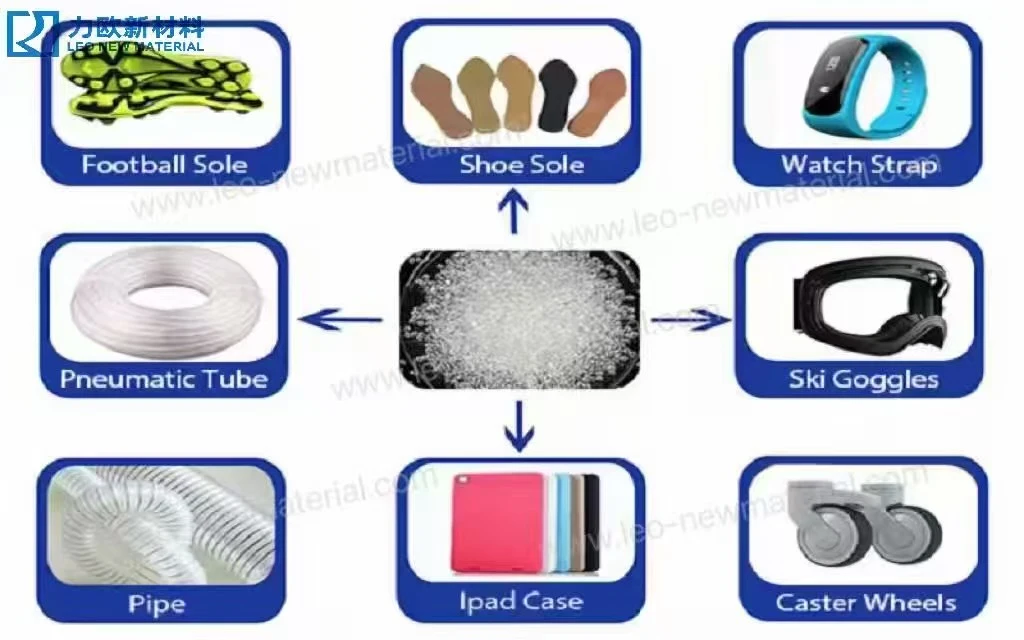
The figure itself is not the key point; what truly warrants attention is the structure. Over the past decade, the growth of TPU films has been driven primarily by the logic of "replacing PVC." Applications requiring softness, wear resistance, and water resistance-including footwear materials, luggage and bags, raincoats, and inflatable products-have all become its primary markets. This logic is now nearly fully realized: in general-purpose applications, the substitution rate of TPU for PVC has already reached a high level, triggering a price war that has pushed the industry's average gross margin into the 20%–25% range.
Three major sectors: healthcare, automotive, and consumer electronics
Article 1: Medical: In 2026, demand growth for TPU films in the healthcare sector is projected to be around 9%, exceeding the industry average. There are two driving factors: first, the aging population and the widespread adoption of minimally invasive surgery have led to increased demand for infusion bags, catheters, and medical dressings; second, regulatory restrictions on plasticizers have made TPU-free of phthalate-based plasticizers and capable of passing ISO 10993 biocompatibility testing-the most direct successor to PVC in the medical consumables sector. The entry barriers for this market are also the highest, involving the ISO 13485 system, cleanrooms, and change control; any one of these requirements is sufficient to exclude small and medium-sized manufacturers from the market.
Article 2 concerns automobiles: automotive TPU films, including paint-protection films and interior wrapping materials; the global market size is projected to reach the $1.7 billion range by 2026, with a growth rate approaching 8%. The requirements for "soft touch" in the interiors of new-energy vehicle manufacturers, stringent standards for low volatile organic compounds, and the penetration of paint-protection films from the aftermarket into the pre-installation market have collectively driven up the per-vehicle consumption of these materials. Some institutions estimate that the amount of TPU material used per vehicle has already reached 3–5 kg.
Article 3 concerns consumer electronics: flexible displays, wearable devices, and ultra-thin packaging have shifted TPU films from "structural components" to "optical components"; both unit prices and gross margins are significantly higher than those in general product categories, and demand growth in this field is expected to approach 15% in 2026. The trade-off is a long validation cycle, stringent specification requirements, and the fact that once customer loyalty is established, it is extremely difficult to replace.
|
dimension |
Reference value for 2026 |
Trend Analysis |
|
Global market size |
Approximately USD 4.6 billion to USD 4.9 billion |
Annual compound growth rate: 6.5% to 7.5% |
|
China market share |
Approximately 40% |
Both output and consumption rank first. |
|
Growth rate of demand in the healthcare sector |
Approximately 9% |
Above the industry average; the highest entry threshold |
|
Automotive film market size |
Approximately $1.7 billion |
Growth rate of approximately 8%, with accelerated pre-installation penetration |
|
Growth in consumer electronics demand |
Approximately 15% |
The fastest growth rate, with the highest unit price and gross margin |
|
Share of bio-based categories |
Less than 5% |
Annual growth rate exceeding 15%, the highest growth potential |
|
Market share of the top five suppliers |
Approximately 65% |
Concentration continues to rise |
Two paths to survival
Industry concentration continues to rise. The world's top five suppliers collectively hold approximately 65% of the market share; most of them are vertically integrated enterprises that span from raw-material aggregation to film processing, creating dual barriers based on cost and supply stability.
For general-purpose products, domestic substitution has essentially been completed, with capacity utilization remaining above 80% and exports continuing to grow; however, for high-end functional films, import dependence remains at around 18%, particularly for categories such as optical-grade ultra-thin films and implant-grade medical films, where the domestication rate remains relatively low.
In the future, this industry will split into two categories, according to a technical leader with over a decade of industry experience: "One group will continue competing on cost within the general membrane market, relying on scale and efficiency to stay viable; the other will move toward certification barriers, using three to five years to secure a" ticket "into the market, after which their prospects will be far more promising."
The Three Core Factors Influencing the Industry
Raw Materials: TPU costs are tightly linked to the prices of MDI and polyols; fluctuations in raw material prices during the first half of 2026 have already prompted many manufacturers to revise their quotations three times. Vertical integration is the solution, but only a small number of companies can afford it.
Recycling: Thermoplasticity implies that TPU can, in theory, be repeatedly recycled; however, in practice, there is virtually no recycling infrastructure for TPU products after they have been consumed. The EU's requirements for recycled-content content are expanding from packaging into consumer goods; whoever first successfully implements a closed-loop system will gain a competitive advantage.
Bio-based: Currently, its share is less than 5%, yet its growth rate exceeds 15%. It is not a standalone market segment; rather, it will gradually permeate the three aforementioned curves, becoming a "standard feature" of high-end products rather than a "value-add."