

What makes Eva Hot Adhesive Film such a popular choice in various industries is its unique properties, and one of the most crucial factors to understand is its melting point. As a supplier of Eva Hot Adhesive Film, I've had my fair share of questions from customers about this very topic. So, let's dive right in and explore what the melting point of Eva Hot Adhesive Film really is.
First off, let me give you a bit of background on Eva Hot Adhesive Film. This type of adhesive film is made from ethylene - vinyl acetate (EVA) copolymer. EVA is a thermoplastic polymer that's known for its excellent flexibility, transparency, and chemical resistance. These qualities make it suitable for a wide range of applications, from packaging to textile bonding.
The melting point of Eva Hot Adhesive Film isn't set in stone. It can vary depending on several factors. One of the main factors is the vinyl acetate (VA) content. In general, as the VA content increases, the melting point of the EVA copolymer decreases. For example, EVA copolymers with a lower VA content (around 10 - 20%) typically have a melting point in the range of 75 - 90°C. On the other hand, those with a higher VA content (30 - 40%) may have a melting point as low as 50 - 60°C.
Another factor that affects the melting point is the molecular weight of the EVA copolymer. Higher - molecular - weight EVA polymers usually have higher melting points. This is because the longer polymer chains are more difficult to separate and move around, requiring more energy (heat) to break the intermolecular forces holding them together.
The presence of additives in the Eva Hot Adhesive Film can also play a role. Additives such as plasticizers, antioxidants, and tackifiers are often added to improve the film's performance. Plasticizers, for instance, can lower the melting point by increasing the flexibility of the polymer chains. Antioxidants, on the other hand, are mainly used to prevent oxidation and degradation of the film, and they may have a minimal impact on the melting point.
Now, you might be wondering why the melting point of Eva Hot Adhesive Film is so important. Well, it has a direct impact on how the film is used in different applications. In applications where the film needs to be bonded quickly and at a relatively low temperature, a lower melting - point EVA film is preferred. For example, in the textile industry, when bonding fabrics together, a lower melting - point film can be used to avoid damaging the delicate fibers.
On the contrary, in applications where the bonded materials need to withstand higher temperatures during subsequent processing or use, a higher melting - point EVA film is a better choice. For example, in the packaging industry, if the packaged products will be exposed to high - temperature environments during shipping or storage, a high - melting - point EVA film can ensure that the bond remains intact.
The melting point also affects the processing conditions of the Eva Hot Adhesive Film. When applying the film, the heat source needs to reach a temperature above the melting point to ensure that the film melts and forms a strong bond. If the temperature is too low, the film won't melt properly, resulting in a weak bond. If the temperature is too high, it can cause the film to degrade or char, which also affects the bonding quality.
Let's talk about some Various Applications Of Eva Hot Melt Adhesives. In the footwear industry, Eva Hot Adhesive Film is used to bond different parts of shoes together. The melting point of the film needs to be carefully chosen based on the materials used in the shoes. For example, if the shoe upper is made of a heat - sensitive material like leather, a lower melting - point film is used to prevent damage to the leather.
In the automotive industry, Eva Hot Adhesive Film can be used for interior trim bonding. Here, high - quality bonds are required, and the film needs to withstand a wide range of temperatures and environmental conditions. So, a higher melting - point EVA film might be more suitable to ensure long - term durability.
When it comes to Eva Hot - melt Adhesive Material, understanding the melting point is also crucial for quality control. As a supplier, we conduct regular tests to determine the melting point of our Eva Hot Adhesive Film. This helps us ensure that the film meets the requirements of our customers.
We use methods like differential scanning calorimetry (DSC) to accurately measure the melting point. DSC measures the amount of heat absorbed or released by a sample as it's heated or cooled. By analyzing the DSC curve, we can determine the exact melting point of the Eva Hot Adhesive Film.
In addition to measuring the melting point, we also consider other properties of the film, such as viscosity, peel strength, and shear strength. These properties, along with the melting point, determine the overall performance of the Eva Hot Adhesive Film.
If you're in the market for Eva Hot Adhesive Film, it's important to work with a reliable supplier who can provide you with accurate information about the melting point and other properties of the film. As a supplier, we pride ourselves on offering high - quality Eva Hot Adhesive Film with consistent melting points and excellent performance.

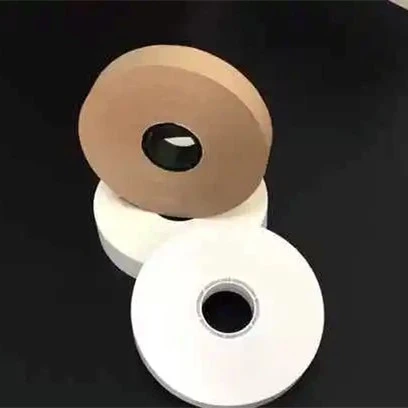
Whether you need a low - melting - point film for delicate applications or a high - melting - point film for demanding environments, we have the right solution for you. We can also provide technical support and guidance to help you choose the best film for your specific needs.
If you're interested in learning more about our Eva Hot Adhesive Film or have questions about the melting point, don't hesitate to reach out. We're here to help you make the right choice for your applications. Contact us to start a conversation about how our Eva Hot Adhesive Film can meet your bonding requirements.
References
- General Polymer Science Textbooks regarding EVA copolymers
- Industry - specific research papers on the applications of Eva Hot Adhesive Film