

Hey there! As a supplier of PU film, I often get asked, "What exactly is the definition of PU film?" Well, let's dive right into it.
PU stands for polyurethane, and PU film, as you might guess, is a film made from this versatile material. Polyurethane is a type of polymer that's been around since the 1930s. It can have a wide range of properties depending on its chemical composition and how it's processed. That's what makes it so cool for creating films.
PU film can come in all shapes and sizes, with different thicknesses, textures, and colors. On a basic level, it's a thin, flexible sheet. But these films can be customized to perform different functions in various industries.
The Basics of PU Film
First off, let's talk about the composition. Polyurethane is made by reacting a polyol (an alcohol with multiple hydroxyl groups) with a diisocyanate (a compound with two isocyanate groups). By varying the types and amounts of these starting materials, manufacturers can control the properties of the resulting polyurethane and thus the PU film.
The physical properties of PU film are pretty impressive. It can be super stretchy, like a rubber band. This elasticity makes it great for applications where the film needs to conform to different shapes or move without tearing. At the same time, it can also be very tough and resistant to abrasion. You won't easily scratch or wear it out, which is a huge plus in many industrial settings.
PU film is also known for its chemical resistance. It can stand up to a lot of different chemicals without breaking down. This makes it suitable for use in environments where it might come into contact with solvents, oils, or other harsh substances.
Types of PU Film
There are several different types of PU film, each designed for specific applications.
Polyurethane Film for Industrial Use
Industrial applications are where PU film really shines. Pu Film for Industrial is used in a variety of ways. For example, in the automotive industry, it can be used for interior trim, like dashboard covers. It provides a soft and luxurious feel while also being durable enough to withstand daily use.
In the manufacturing of machinery, PU film can be used as a protective layer. It can prevent scratches and damage to the equipment's surface, extending its lifespan. It's also used in the production of conveyor belts. The film's high friction and wear resistance make it ideal for this purpose, ensuring smooth and efficient operation of the belts.
Polyurethane Film Medical
Medical applications of PU film are also quite significant. Polyurethane Film Medical has some unique properties that make it suitable for use in healthcare. It's biocompatible, which means it can be in contact with the human body without causing an adverse reaction.
One common use is in wound dressings. The film can create a protective barrier over the wound, preventing bacteria from entering and promoting faster healing. It's also breathable, allowing moisture and gases to pass through. This helps keep the wound environment healthy and reduces the risk of infection.
In addition, PU film is used in medical devices. For example, it can be found in catheters and other tubular devices. Its flexibility and smooth surface make it easy to insert and remove these devices while minimizing discomfort to the patient.
Advantages of Using PU Film
One of the biggest advantages of PU film is its versatility. As I mentioned earlier, it can be customized to have different properties. Whether you need a film that's soft and stretchy or one that's hard and rigid, it can be made to order.
Another great thing about PU film is its durability. It can last a long time even under harsh conditions. This means less frequent replacement, which can save you money in the long run.
PU film is also environmentally friendly in some respects. Many types of polyurethane films are recyclable, which helps reduce waste. And compared to some other materials, it can be produced with less energy consumption.
How We Make Our PU Film
As a supplier, we take pride in our production process. We start by carefully selecting the raw materials. We work with high - quality polyols and diisocyanates to ensure the best possible properties of our PU film.
The production involves a series of steps. First, the polyol and diisocyanate are mixed together in precise proportions. This mixture is then heated and reacted to form the polyurethane. The resulting polymer is then processed into a film using techniques like extrusion or casting.
During the production, we closely monitor the quality. We test the film for properties such as thickness, elasticity, and chemical resistance. This way, we can guarantee that our customers get a product that meets their requirements.
Where to Use Our PU Film
Beyond the industrial and medical applications I've already mentioned, our Polyurethane Film has many other uses.
In the construction industry, it can be used for waterproofing. The film can be applied to roofs, basements, and other areas to prevent water from seeping in. Its flexibility allows it to conform to the shape of the surface, providing a tight seal.

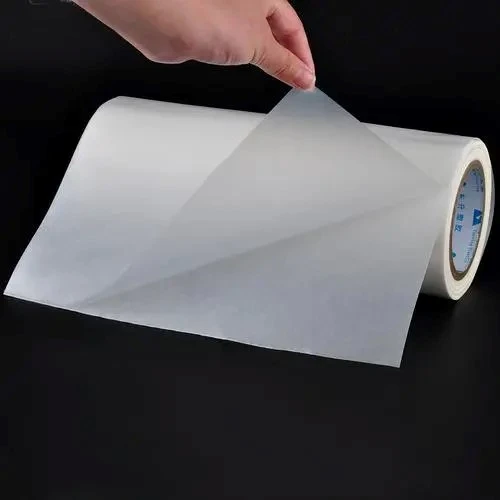
In the fashion industry, PU film is used to create unique and stylish fabrics. It can be laminated onto fabrics to give them a shiny or metallic look. Designers also use it to make accessories like bags and shoes, adding a modern and edgy touch.
Time to Connect
If you're in the market for high - quality PU film, look no further. We're a reliable supplier offering a wide range of PU film products. Whether you need it for industrial use, medical applications, or any other purpose, we've got you covered.
We can work with you to understand your specific requirements and customize the film to suit your needs. So, don't hesitate to reach out. Let's start a conversation about how our PU film can benefit your business.
References
- Smith, J. (2020). Polyurethane Materials: Properties and Applications. Journal of Polymer Science.
- Johnson, A. (2019). Medical Uses of Polyurethane Films. Medical Device Technology.
- Brown, C. (2018). Industrial Applications of Polyurethane Films. Industrial Manufacturing Review.