

Let's dive right into the fascinating topic of how functional TPU film fares in radiation - exposed environments. As a supplier of functional TPU film, I've seen firsthand the remarkable properties of this material and how it reacts when faced with various types of radiation.
Understanding Functional TPU Film
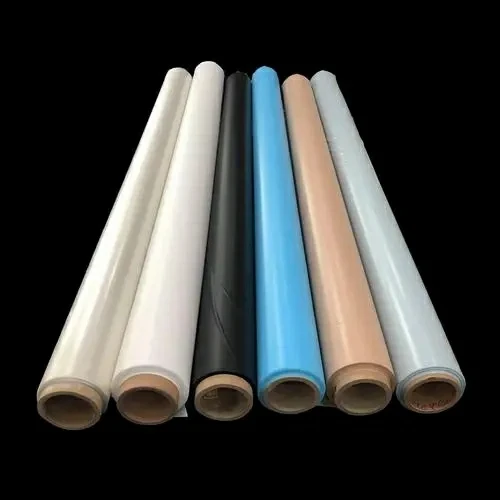
Functional TPU (Thermoplastic Polyurethane) film is a super - versatile material. It combines the flexibility of rubber with the processability of plastic. We've got different kinds of functional TPU films for various uses. You've got the TPU Film for Heating and Cooling System which plays a crucial role in maintaining the right temperature in HVAC systems. Then there's the TPU Film for Bicycle Tires, offering durability and puncture resistance. And let's not forget the Heat Transfer TPU Film that's great for transferring heat evenly.
Different Types of Radiation and Their Effects
Radiation comes in many forms, and each type can have a unique impact on TPU film. We've got electromagnetic radiation like UV rays, X - rays, and gamma rays, and then there's particle radiation such as alpha and beta particles.
UV Radiation
UV radiation is something we encounter every day from the sun. It can cause degradation in many materials over time. But functional TPU film has some built - in resistance. The chemical structure of TPU allows it to absorb and dissipate a significant amount of UV energy. However, prolonged exposure can still lead to some changes. The film might start to yellow, and its mechanical properties like tensile strength and elongation at break could decrease slightly. But we've developed special UV - stabilized functional TPU films that can withstand long - term UV exposure much better. These films are great for outdoor applications, like in building facades or solar panel covers.
X - rays and Gamma Rays
X - rays and gamma rays are high - energy types of radiation. They can penetrate deep into materials and interact with their atoms. When functional TPU film is exposed to these types of radiation, it mainly depends on the dose and the duration of exposure. At low doses, the film usually remains relatively stable. But at high doses, the radiation can break down the polymer chains in the TPU. This can lead to changes in the film's physical and chemical properties. For example, it might become more brittle or lose its elasticity. We've done some tests in the lab, and by adding certain additives to the TPU formulation, we can enhance its radiation resistance. These additives act as scavengers, capturing the free radicals generated by the high - energy radiation and preventing further damage to the polymer chains.
Particle Radiation (Alpha and Beta Particles)
Alpha and beta particles are charged particles. Alpha particles are relatively large and can't penetrate very far into materials. They're usually stopped by a thin layer of material, and functional TPU film can easily block them. Beta particles are smaller and more energetic. They can penetrate deeper into the TPU film. When beta particles interact with the film, they can ionize the atoms in the polymer, creating free radicals. These free radicals can then react with other molecules in the film and cause degradation. But again, with the right formulation and additives, we can minimize the damage caused by particle radiation.
Real - World Applications in Radiation - Exposed Environments
There are several real - world scenarios where functional TPU film is used in radiation - exposed environments.
Medical Field
In the medical field, X - rays and gamma rays are commonly used for diagnostic and therapeutic purposes. Functional TPU film can be used in medical equipment such as X - ray shields. The film's ability to block and absorb a certain amount of radiation makes it a good choice for protecting patients and medical staff from unnecessary radiation exposure. It's also flexible, which means it can be easily shaped into different forms to fit the specific needs of the equipment.

Space Industry
In space, the environment is filled with high - energy radiation from the sun and cosmic rays. Functional TPU film can be used to protect spacecraft components. For example, it can be used as a protective layer for cables and wires. The film's radiation resistance helps to ensure the long - term reliability of these components, which is crucial for the success of space missions.
How We Ensure the Performance of Our Functional TPU Film
As a supplier, we take several steps to make sure our functional TPU film performs well in radiation - exposed environments.
Research and Development
We invest a lot in R&D. Our team of scientists is constantly working on improving the formulation of the TPU film. We're always looking for new additives and processing techniques that can enhance the film's radiation resistance. For example, we're exploring the use of nanomaterials, which can provide better protection against radiation at a lower cost.
Quality Control
We have a strict quality control process in place. Every batch of functional TPU film is tested for its radiation resistance before it leaves our factory. We use a variety of testing methods, including accelerator - based radiation sources in the lab. This allows us to simulate different radiation environments and ensure that the film can meet the required standards.
Conclusion
In conclusion, functional TPU film has some pretty impressive performance in radiation - exposed environments. Whether it's the everyday UV radiation from the sun or the high - energy radiation in medical or space applications, it can hold up well with the right formulation and additives.
If you're in need of high - quality functional TPU film for your own radiation - exposed applications, don't hesitate to reach out. We're here to help you find the best solution for your specific needs. Let's have a chat and see how we can work together to make your projects a success.
References
- Polymer Science: A Comprehensive Reference, Volume 3: Radiation Effects on Polymers
- Handbook of Thermoplastic Elastomers, Second Edition